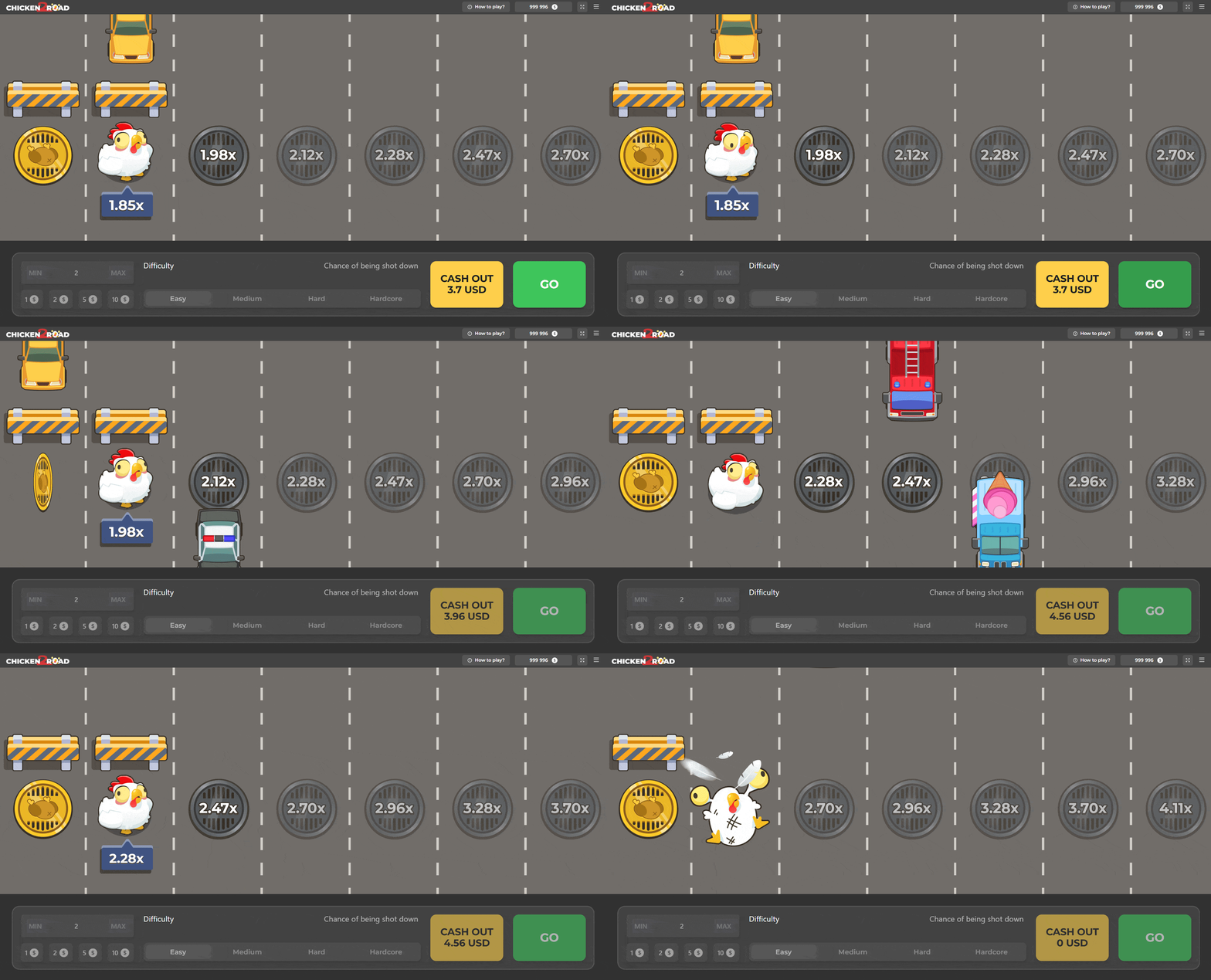


Did you know that enhancing cache administration can reduce loading durations by up to 70% in online gaming? In the case of Poultry Road, intelligent cache techniques perform a crucial role in achieving seamless gaming. By analyzing how these techniques are applied, we can reveal the fundamental principles that add to its performance. This understanding shows not only the efficacy of Poultry Road’s approach but also the evolving landscape of game technology.
Key Takeaways
- Poultry Road’s storage management utilizes flexible information management, adjusting resources to changing gameplay loads for peak efficiency.
- Predictive storage systems predict player behavior, allowing preemptive resource distribution to enhance player experience.
- Resource bundling lowers server calls, ensuring reduced load times and superior visuals for players.
- Continuous efficiency reviews detect bottlenecks, offering understandings that guide cache optimizations for more seamless gameplay.
- The integration of edge computing decreases delay, leading to a increased reactive gaming engagement.
The Importance of Cache Management in Games
As we delve into the world of gaming, it’s crucial to comprehend that efficient storage management can significantly enhance our overall engagement. By focusing on storage efficiency, we can optimize our game strategy, resulting to more seamless gameplay and reduced loading durations. The proper cache practices guarantee our systems efficiently save and access data, avoiding delays that interrupt our immersion.
When we optimize our cache settings, we create a uninterrupted environment for real-time information exchanges, keeping us advantageous against other players. Implementing strategic cache management not only boosts our current experiences but also sets the foundation for future developments in gaming technology. Ultimately, mastering cache management arms us with the tools necessary to enhance our gaming endeavors to new heights.
How Chicken Road Implements Cache Strategies
In Chicken Road, we prioritize optimized asset loading to keep the game running seamlessly. Our dynamic data management secures players have access to the latest content without disruptions. By implementing these strategies, we boost the overall user experience and keep everyone engaged.
Optimized Asset Loading
While managing assets effectively can be challenging, Chicken Road has developed caching strategies that optimize asset loading for a uninterrupted player experience. Our approach ensures that players enjoy minimal loading times and high-quality visuals by implementing several key techniques:
- Optimized textures improve visual fidelity while decreasing memory usage.
- Efficient loading cycles emphasize essential assets, ensuring what players need loads first.
- Strategically leveraging asset bundling decreases the number of requests, improving performance.
Dynamic Data Management
Building on our enhanced asset loading techniques, dynamic data management plays a vital role in how we implement our cache strategies in Chicken Road. By utilizing dynamic scaling, we ensure that our cache adapts to the changing loads during gameplay, effectively managing resource allocation. This adaptability allows us to maintain performance levels without diminishing user experience. Moreover, we achieve real-time synchronization across all platforms, ensuring that players always have access to the most current data. This synchronization eliminates latency issues that can disrupt the gaming experience and keeps gameplay seamless. By integrating these strategies, we not only enhance performance but also bolster the overall efficiency of our caching system, reinforcing our commitment to an streamlined gaming experience.
User Experience Enhancement
Enhancing user experience is at the forefront of our cache strategies in Chicken Road. We prioritize effective cache management to ensure our players enjoy seamless gameplay. By incorporating player feedback, chicken road 2 game gaming, we’ve refined our approach, emphasizing UI responsiveness and efficiency. Here are three key strategies we employ:
- Adaptive Caching
- Feedback Loops
- Resource Optimization
These strategies not only improve our players’ experience but also strengthen our commitment to continuous improvement in Chicken Road.
Reducing Load Times: Techniques and Benefits
To minimize load times in our Chicken Road game, we should focus on enhancing resource utilization and adopting robust data caching strategies. By reducing network latency, we can enhance the overall gaming experience for everyone. Let’s investigate the techniques and benefits these methods can bring.
Optimizing Resource Utilization
As we aim to create a uninterrupted gaming experience, optimizing resource utilization becomes crucial in minimizing load times. Effective resource allocation can greatly improve our game’s performance metrics, ensuring players engage without frustrating delays. Here are some techniques we can apply:
- Dynamic resource allocation
- Prioritizing crucial assets
- Regular performance audits
Effective Data Caching Strategies
While we strive for a seamless gaming experience, implementing efficient data caching strategies is essential in lowering load times. One of the most effective methods is user session caching, which lets us store specific user data temporarily. This boosts performance since frequently accessed information is easily available. Additionally, we must implement effective cache invalidation strategies to ensure that outdated or irrelevant data doesn’t affect gameplay. By efficiently managing our caching systems, we can maintain speed and reliability, enhancing our players’ overall experience. Ultimately, these strategies not only reduce latency but also optimize resource utilization, letting us provide a smooth, immersive gaming environment that keeps players coming back for more.
Decreasing Network Latency
Since lowering network latency is vital for an superior gaming experience, we need to implement several techniques that efficiently reduce load times. Here are some strategies we can adopt:
- Utilize buffering solutions to preload data, reducing waiting time during gameplay.
- Optimize server locations to ensure they’re closer to our user base, shortening the distance data must travel.
- Enhance network scalability to support more users smoothly without compromising speed.
Analyzing Data Handling and Storage Efficiency
Proper data handling and storage can significantly enhance our management of the Chicken Road Game cache. By optimizing our data storage techniques, we can reduce lag and improve player satisfaction. We should focus on analyzing performance metrics to pinpoint inefficiencies within our current systems. This allows us to make educated decisions on how to allocate resources and where to implement changes. Implementing reliable data structures will ensure we retrieve needed information swiftly, thus improving the overall gaming experience. Additionally, a detailed examination of our storage capabilities will reveal opportunities for cost-saving measures and improved data integrity. By focusing on these areas, we position ourselves to excel in delivering a seamless gameplay environment. Let’s strive for excellence in data efficiency.
Performance Optimization Techniques in Chicken Road
To further enhance the gaming experience in Chicken Road, we need to employ performance optimization techniques that work in harmony with our improved data handling strategies. By focusing on efficient chicken mechanics, we can enhance player engagement substantially. Here are three key techniques we can implement:
- Code Profiling
Utilizing these techniques not only maximizes our game’s efficiency but also transforms player satisfaction, keeping them immersed in the vibrant world of Chicken Road.
Comparing Cache Management in Competitor Games
While reviewing cache management in competitor games, we can reveal valuable insights that may enhance our own strategies in Chicken Road. Many competitor games utilize advanced caching algorithms that significantly boost game performance by reducing loading times and improving resource allocation. For instance, some games give priority to frequently accessed assets, guaranteeing players experience smooth gameplay without lags. Through competitor analysis, we can determine effective techniques, such as dynamic cache resizing, which adapts resource allocation based on real-time demands. Additionally, incorporating predictive caching models allows these games to anticipate player behavior, further optimizing performance. By examining these strategies, we can enhance our cache management approach in Chicken Road, making it more resilient and reactive to players’ needs.
Future Trends in Cache Management for Online Gaming
As we look ahead in the realm of online gaming, new trends in cache management vow to change how we improve performance. Future predictions suggest that with the rise of emerging technologies, our approach to caching will become more advanced. Here are a few key trends we should anticipate:
- Adaptive Caching Algorithms
Conclusion
In conclusion, Chicken Road’s ingenious cache management enthralled players by crafting a seamless, swift gaming experience. By prioritizing predictive caching and dynamic data handling, we not only boost performance but also create a remarkable balance between efficiency and enjoyment. As we move forward, we’ll continue to innovate, ensuring our strategies stay cutting-edge and responsive in this competitive landscape. Ultimately, smart cache management conserves time, speeds up performance, and reinforces our standing in the ever-evolving gaming world.